US shipping only / $10 off on orders $75+
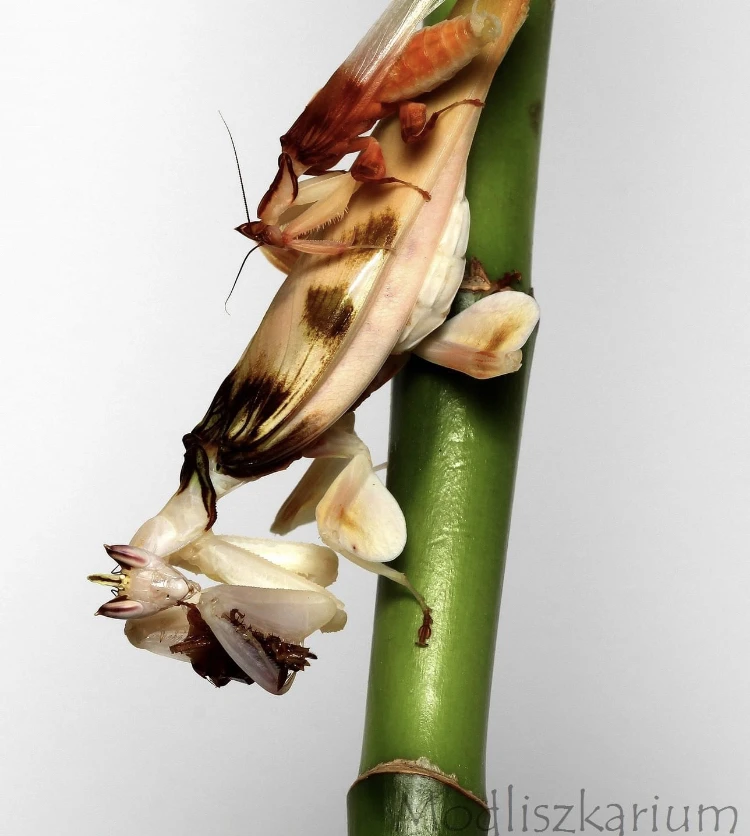
Orchid Mantis (Hymenopus coronatus)
Written by @Parablepharis kuhlii asiatica
Difficulty: Intemerdiate
Size: ~1in (2.5cm) for males ~2-3in (6-7.5cm) for females
Humidity: 50-70%
Temperature: 74-88°F (23-31°C)
Feeding: This species is finicky. It's generally best to subsit them on flying prey. A good substitute for flying insects if they can't be easily obtained are banana cockroaches (Panchlora spp) and male red runner roaches since they can fly. Tong feed these prey items to the orchid mantis.
What to feed: i1-i3 nymphs: Fruit flies (D. meloganaster, D. hydei) i4-i6 nymphs: House flies, bluebottle/greenbottle flies, polinator insects, small crickets, small roaches i6-Adult: House flies, bluebottle/greenbottle flies, polinator insects, small crickets, small roaches
Enclosure: A 32 ounce cup can be used for all its life. Have top and side ventilation (the latter is extremely important) since orchid mantises will die if not given adaquete ventilation. Flowers aren't needed to keep this mantis. Have substrate at the bottom to keep it humid.
Other Info: If you follow the guidelines, this species will be easy to raise and breed. The instar differences between males and females are two instar stages. This means that the males don't live as long as the females. To breed them, one just nudges the male onto the orchid mantis female's back while it is given a prey item. The male will drum on the female's wings and will try and connect if he is mature enough. Hatching the ooths is more difficult. Their incubation seems to be finicky and ooth hatching seems variable. 20-50 nymphs can hatch from an ooth depending on size. It seems that having a large population of them as well as having staggered males and females is necessary to keep the culture alive.
Credit to Modiszkarium.